This article, co-authored with my PhD supervisors, has been recently published at the Journal of Cleaner Production.
Abstract
Product lifetimes and obsolescence have been central points of discussion in the fashion field. In this context, design researchers and practitioners have proposed a variety of strategies to enable slower cycles of product replacement, leading to smaller volumes of clothing production and consumption. A previous review of these strategies, however, revealed that there is no empirical evidence of their efficacy in terms of lifetime extension or environmental sustainability. Therefore, this research takes a first step in covering this knowledge gap. It proposes methods to assess the impact of such approaches and applies them to the specific case of “product personalisation”, the strategy most frequently mentioned in literature.
Clothing has characteristics that are not present in other product categories common in lifetimes studies. These characteristics enable comparative analysis of products, diachronic studies over relatively short periods of time, and estimations of the environmental benefits of lifetime extension. Taking advantage of such particularities, the article evaluates the environmental gains of personalised products by comparing their performance with ready-made garments in terms of age, usage, influence on new product demand, and waste. The research is based on a series of wardrobe studies and company interviews.
The outcomes of these studies question the environmental benefits of product personalisation. When compared with ready-made garments, personalised garments were not kept for longer time, nor were they used more frequently. Moreover, no evidence of their contribution to reductions in new product demand and waste was found.
These findings confirm the need for more empirical research to understand the effect of this and other design strategies aimed at delaying clothing obsolescence and reducing production volumes and waste. Such enquiries can provide relevant feedback to practitioners developing creative solutions. In that way, empirical research and creative practice can benefit from each other's input and build iterative cycles that ensure effective actions. The methods advanced in this study aim at supporting this valuable line of research, leading to a more environmentally-sound apparel sector.

This blog documents and shares information about my research topics. It includes short introductions to books and papers, exhibitions and events reviews.
Irene Maldini. Researcher at Amsterdam University of Applied Sciences, Lectoraat Fashion Research and Technology and PhD Candidate at VU University Amsterdam.
Showing posts with label Fashion. Show all posts
Showing posts with label Fashion. Show all posts
22 Nov 2018
20 Nov 2017
Three events on fashion, design and sustainability
Busy times this semester! I've been attending some events related to this research.
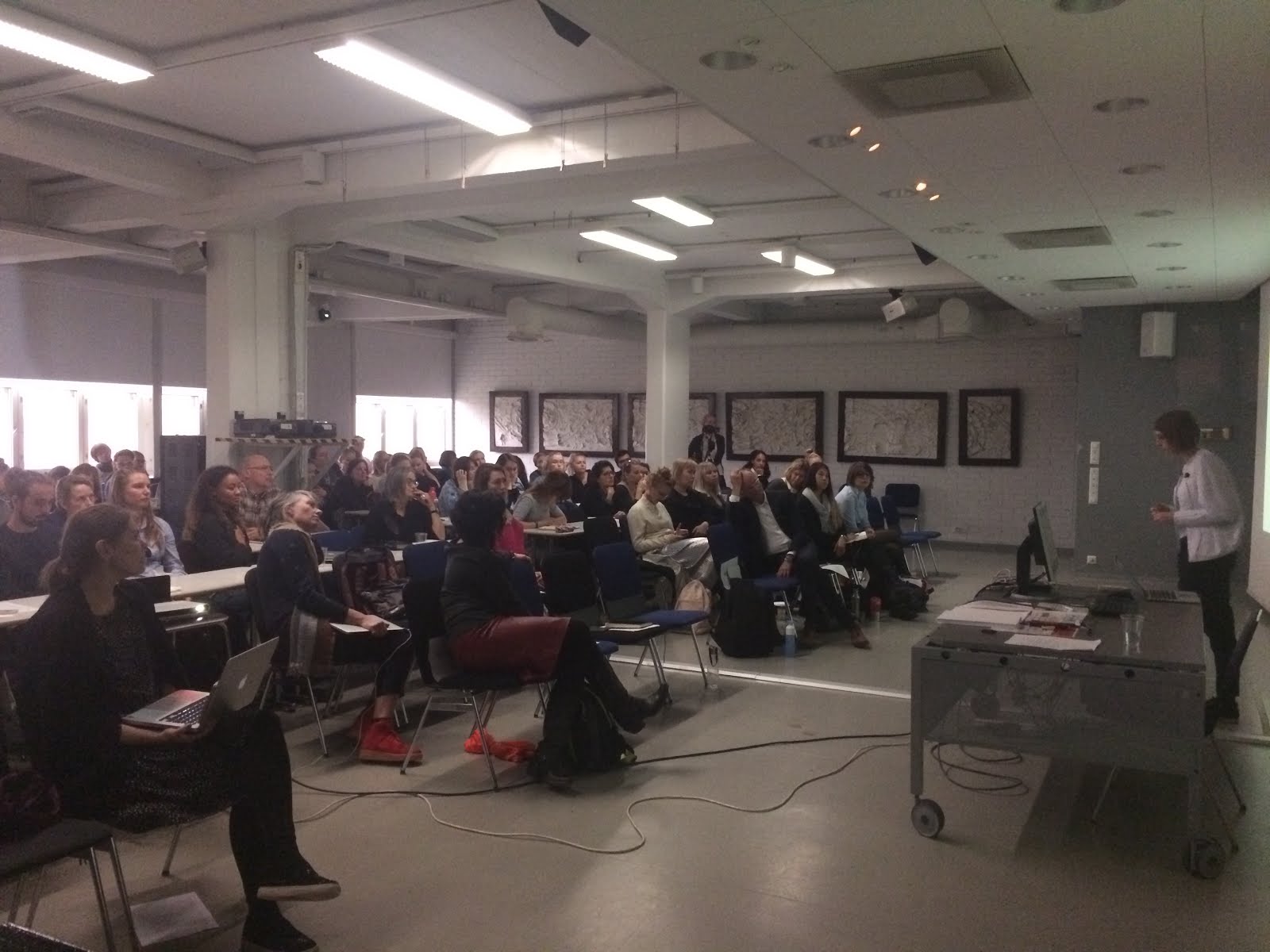
On the 9th and 10th of October I traveled to Aalto University in Helsinki to attend the Seminar Sustainable Fashion in a Circular Economy and the Doctoral Colloquium in Sustainable Fashion organised by Kirsi Niinimaki. The colloquium was a great opportunity to meet international peers and understand different research approaches in sustainable fashion at a doctoral level. There were practice-based design researchers, anthropologists, economists, etc. Great chance to comment on and be aware of each other's work. I shared and overview of my PhD with doctoral candidates and professors and got good feedback. Some participants found my findings important and surprising.
The seminar hosted interesting talks. Sarah Han's insights on UK's textile waste management and Ruari Mahon's branding and retail cases focusing on sustainable values were particularly relevant and new to me. From a design perspective, Ulla Ræbild's insights on How to Design Garments for a Subscription Service were also refreshing. The activity of the Sustainable Fashion research group, led by Kirsi Niinimaki is impressive. Finland is definitely in front of the Netherlands in terms of research in sustainable fashion. Probably due to the institutional context of fashion design education (University rather than Applied Sciences University level, with a longer tradition in research).


On the 20th October Amsterdam Fashion Institute and Circle Economy organised a new edition of their Beyond Green event. This time it took place at the headquarters of the company HEMA in Amsterdam Noord. The most interesting part of this event is that students work on actual sustainability challenges proposed by industry. Moreover, the morning hosted speakers (mainly from industry) on fashion and sustainability. Good event for the general public. My researcher head sometimes misses more in-depth content is this kind of events, but it's a great inspiration for those with a hands-on approach. The organisation and storytelling skills of Gwen Cunningham surprise me over and over again.

Finally, on the 8th, 9th and 10th of November I participated in the Product Lifetimes and the Environment (PLATE) in Delft. This was one of the best conferences I've attended. With around 150 attendees, it really felt like a community of like-minded people doing relevant research work. Surprisingly, there was a lot of research on clothing. The event included a PhD-only session for networking (photo), keynote speakers including the inaugural talk of Prof. Ruud Balkenende at TU Delft and dozens of article presentations. I presented the article "Reducing clothing production volumes by design: a critical review of sustainable fashion strategies", co-authored with Balkenende. I got great comments on the article and the results of the clothing mountain project, which I sneaked briefly in the presentation.

On the 9th and 10th of October I traveled to Aalto University in Helsinki to attend the Seminar Sustainable Fashion in a Circular Economy and the Doctoral Colloquium in Sustainable Fashion organised by Kirsi Niinimaki. The colloquium was a great opportunity to meet international peers and understand different research approaches in sustainable fashion at a doctoral level. There were practice-based design researchers, anthropologists, economists, etc. Great chance to comment on and be aware of each other's work. I shared and overview of my PhD with doctoral candidates and professors and got good feedback. Some participants found my findings important and surprising.
The seminar hosted interesting talks. Sarah Han's insights on UK's textile waste management and Ruari Mahon's branding and retail cases focusing on sustainable values were particularly relevant and new to me. From a design perspective, Ulla Ræbild's insights on How to Design Garments for a Subscription Service were also refreshing. The activity of the Sustainable Fashion research group, led by Kirsi Niinimaki is impressive. Finland is definitely in front of the Netherlands in terms of research in sustainable fashion. Probably due to the institutional context of fashion design education (University rather than Applied Sciences University level, with a longer tradition in research).

On the 20th October Amsterdam Fashion Institute and Circle Economy organised a new edition of their Beyond Green event. This time it took place at the headquarters of the company HEMA in Amsterdam Noord. The most interesting part of this event is that students work on actual sustainability challenges proposed by industry. Moreover, the morning hosted speakers (mainly from industry) on fashion and sustainability. Good event for the general public. My researcher head sometimes misses more in-depth content is this kind of events, but it's a great inspiration for those with a hands-on approach. The organisation and storytelling skills of Gwen Cunningham surprise me over and over again.

Finally, on the 8th, 9th and 10th of November I participated in the Product Lifetimes and the Environment (PLATE) in Delft. This was one of the best conferences I've attended. With around 150 attendees, it really felt like a community of like-minded people doing relevant research work. Surprisingly, there was a lot of research on clothing. The event included a PhD-only session for networking (photo), keynote speakers including the inaugural talk of Prof. Ruud Balkenende at TU Delft and dozens of article presentations. I presented the article "Reducing clothing production volumes by design: a critical review of sustainable fashion strategies", co-authored with Balkenende. I got great comments on the article and the results of the clothing mountain project, which I sneaked briefly in the presentation.


19 Sept 2017
How big is the Dutch clothing mountain?

The HvA, MODINT, Saxion, MVO Nederland, Circle Economy and Sympany have collaborated to measure the Dutch clothing mountain and compare it with that of other countries in the region.
The research indicates that Dutch consumers buy approximately 46 items of clothing and footwear per year. We keep approximately 173 items in our wardrobe, of which 50 have not been worn in the last year and 7 are second-hand. 3 garments per person are discarded in the supply chain (before arriving to consumers). We throw away approximately 40 clothes per year, 24 of these are incinerated. 5 are collected separately but they are not suitable for reuse, so they can be recycled, 2 are rewearable according to consumers, but not by international second-hand standards; finally, 9 of these garments are suitable for the international second-hand market.
Based on these and other facts, we provide recommendations to reduce the size of the Dutch clothing mountain for consumers, companies, designers, fashion schools, textile collectors and sorters, municipalities, and public policy. Moreover, we suggest promising directions for further research.
13 Sept 2017
PhD update
PhD Title:
User involvement in design: implications for the sustainability of clothing
Supervisors:
Prof.
Hein Daanen | VU | Faculty of Behavioral and Movement Sciences
Prof.
Javier Gimeno Martínez | VU | Faculty of Arts, Design Cultures
Prof.
Pieter Jan Stappers | TU Delft | Industrial Design
Period:
2015-2019
Summary:
This
multidisciplinary PhD project explores the possibility of diminishing the
volumes of clothing produced and consumed through personalization and
production on demand. This possibility is examined critically through three
different perspectives: a fashion history and theory approach, an empirical
(quantitative and qualitative) approach and a research-through-design approach.
During
the fashion history and theory phase
of this research, user involvement in design and production of personalized
clothing on-demand are put in historical and theoretical context. The article “On paradigm shifts and industrial revolutions: tracing
prevalent dressmaking practices and apparel production systems in the Netherlands
and northwest Europe (1850-2016)” (Maldini,
2017) traces the rise of ready-made
garments in the Netherlands and northwest Europe, and the associated decline in
custom- and home-made garments in the region. Although available statistical
data is insufficient to accurately map these phenomena, secondary sources
suggest that both processes were not simultaneous and therefore there was not a
straightforward substitution of custom- and home-made clothing by ready-mades.
While availability and trade of mass-produced ready-mades was escalating since
the early 19th C, it was not until mid 20th C that
custom- and home-made clothing declined among the middle class. In this study,
such a gap is explained by a steady increase in the amount of clothes acquired
per person: an expanding culture of consumption during the period under
consideration may have enabled these different systems to flourish all
together.
A parallelism of the
findings above with current developments in mass customization and the discourse
of the fourth industrial revolution suggests that we should not regard emergent industrial
formats as substitutionary of established ones, but as complementary. We may
then reevaluate to what extent does the rise of the flexible factory enable a
“revolution”, a shift from a problematic present to a contrasting and desirable
future. This historical overview indicates that, on the contrary, emerging
product-service-systems manufacturing personalized garments on-demand must be
considered in relation to – and in coexistence with- traditional
industrial models.
Another article titled “The perfect
dress and its making: a comparative study of the sartorial habits of Amsterdam
women (1950s-2010s)” (Maldini & Manz, 2016)
examines how the role of clothing has changed during the last 60 years. The
ethnographic study indicates that during the 1950s a main concern of young
Amsterdam women was that of conforming to explicit fashion trends. However, while
the values and ideas behind their sartorial practices were generic, the
material resources to realize them (the garments themselves) were unique.
Self-made and personally-made clothes were widespread and each garment was
distinctive in material terms. During the last 60 years, we argue, developments
have been somewhat paradoxical. While
individuality and originality are major concerns for today’s women, most of the
clothing industry works on the basis of repetition.
In
the article “From
Things of Imitation to Devices of Differentiation: Uncovering a
Paradoxical History of Clothing (1950–2015)” (Maldini & Manz, 2017) the ethnographic
research above is used as a case study to argue for a renovated theoretical framework in fashion studies. The article proposes
that perspectives emphasizing the social role and the technological nature of
dress should be considered complementary, and that their joint application can
contribute to new understandings of fashion history. A theoretical framework
integrating theories of identity (mainly based on the writings of Georg Simmel
and Gabriel Tarde) and philosophy of technology (in this case the device
paradigm of Albert Borgmann) allows us to uncover a paradoxical history of
fashion in which clothing shifts roles, transforming from “things of imitation”
into “devices of differentiation”.
In
the second phase of this project the
relationship between clothing personalization and clothing volumes is studied
using an empirical approach. This phase starts with a systematic literature
review of sustainable fashion strategies aimed at reducing clothing volumes.
The article “Reducing clothing production volumes by
design: a critical review of sustainable fashion strategies” (Maldini &
Balkenende, 2017) discusses how the challenge of diminishing
clothing production volumes has been approached within the field of sustainable
fashion. We identify six common strategies in literature and discuss the
approach of user involvement in the process of design and/or manufacture of
garments in detail. A critical analysis of the state of the art in the field
points out that these strategies have been constructed, studied and promoted
without empirical validation. The article concludes with a recommendation to
move forward from conceptual to empirical studies. Analyses of existing
initiatives and their results in terms of consumer buying behavior and obsolete
inventory are recommended as first steps towards validation.
A
forthcoming article continues this line of enquiry by empirically testing four
hypotheses linking personalization and reduced clothing volumes. In the
literature, these are usually presented as comparative advantages of
personalization in relation to mass production, namely: a) higher use frequency
of products, b) longer life-span of products, c) reduction in clothing demand
based on higher product satisfaction (smaller number of garments with higher use value), and d) reduction in the
number of unsold products (pre-consumer waste). These are tested on the basis
of wardrobe studies (covering points a to c above) and company interviews
(point d above).
For
the third phase of this PhD research, the
study continues based on a research-through-design approach.
The
findings of the first and second phase of the research indicate that the
relationship between personalization and reduced clothing demand is not
straight forward when we consider it historically and empirically. Analyses of
the implications of personalization tend to focus on “the garment” as an
isolated unit of research/design/use, leading to hypotheses of decreasing
demand through user involvement in design. However, garments in use are items
of a broader system: the wardrobe. Personal wardrobes are usually complex
systems, flexible in size and structure. The metabolism of wardrobes is
diverse, garments get in and out for different reasons and their origin and
destination is varied. On the other hand, analyses of the potential of
personalization to reduce clothing demand tend to assume that a personal
wardrobe is a static ensemble, which includes a fixed number of items in each
garment type and where every item discarded is substituted by a new purchase.
Although
clothing consumption and use are issues attracting a lot of attention from
users, companies, and researchers alike, wardrobes receive only marginal
attention. Therefore, the research question of this third phase is: How a
systemic perception of the wardrobe may affect everyday sartorial practices? This
question is explored using the creative process and resulting research
artifacts (prototypes) to generate knowledge. The study involves two
activities: a) a creative session with experts in order to co-design the
research artifact, and b) a discussion of the research artifact with participants
of the former wardrobe studies. Given that Internet of things, product-service
systems, ubiquitous computing and data-driven life are particularly relevant
today; a connected wardrobe system seems a relevant research artifact to
explore the research question above. This phase is currently in development.
References
Maldini, I. (2017). On paradigm shifts and
industrial revolutions: tracing prevalent dressmaking practices and apparel
production systems in the Netherlands and northwest Europe (1850-2016). In Breaking
the fashion rules. Annual conference of the International Foundation of Fashion
Technology Institutes (IFFTI). Amsterdam.
Maldini, I., & Balkenende, R. (2017).
Reducing clothing production volumes by design: a critical review of
sustainable fashion strategies. In PLATE. Product Lifetimes and the
Environment. Delft.
Maldini, I., & Manz, R. (2016). The
Perfect Dress and its Making: a Comparative Study of the Sartorial Habits of
Amsterdam Women (1950s-2010s). In W. Wong, Y. Kikuchi, & S. T. Lin (Eds.), Making
Trans/National Contemporary Design History. 10th Conference of the ICDHS. (pp.
157–161). Taipei. https://doi.org/10.5151/despro-icdhs2016-029
Maldini, I., & Manz, R. L. (2017). From
“Things of Imitation” to “Devices of Differentiation”: Uncovering a Paradoxical
History of Clothing (1950–2015). Fashion Theory, 7419(April),
1–16. https://doi.org/10.1080/1362704X.2017.1316577
25 Apr 2017
From “Things of Imitation” to “Devices of Differentiation”: Uncovering a Paradoxical History of Clothing (1950–2015)
This article, co-authored with Ragna Manz, has been recently published at the journal Fashion Theory.
Abstract
This article argues for an updated theoretical framework in fashion studies. It proposes that perspectives emphasizing the social role and the technological nature of dress should be considered complementary, and that their joint application can contribute to new understandings of fashion history. Employing ethnographic methods, this stance is explored through a comparative analysis of the sartorial practices of two groups of women living or working in Amsterdam during the 1950s and the 2010s. A theoretical framework integrating theories of identity (mainly based on the writings of Georg Simmel and Gabriel Tarde) and the philosophy of tech-nology (in this case the device paradigm of Albert Borgmann) allows us to uncover a paradoxical history of fashion in which clothing shifts roles, transforming from “things of imitation” into “devices of differentiation.”
KEYWORDS: fashion theory, history of dress, identity, materiality, philosophy of technology
Download here
Abstract
This article argues for an updated theoretical framework in fashion studies. It proposes that perspectives emphasizing the social role and the technological nature of dress should be considered complementary, and that their joint application can contribute to new understandings of fashion history. Employing ethnographic methods, this stance is explored through a comparative analysis of the sartorial practices of two groups of women living or working in Amsterdam during the 1950s and the 2010s. A theoretical framework integrating theories of identity (mainly based on the writings of Georg Simmel and Gabriel Tarde) and the philosophy of tech-nology (in this case the device paradigm of Albert Borgmann) allows us to uncover a paradoxical history of fashion in which clothing shifts roles, transforming from “things of imitation” into “devices of differentiation.”
KEYWORDS: fashion theory, history of dress, identity, materiality, philosophy of technology
Download here
3 Apr 2017
On paradigm shifts and industrial revolutions: tracing prevalent dressmaking practices and apparel production systems in the Netherlands and northwest Europe (1850-2016).
My paper On paradigm shifts and industrial revolutions: tracing prevalent dressmaking practices and apparel production systems in the Netherlands and northwest Europe (1850-2016) was recently presented at the 19th IFFTI (International Foundation of Fashion Technology Institutes) conference in Amsterdam. The article got the first price for the category Postgraduate/Research students. See the abstract and download the full paper below.
ABSTRACT
Personalization, production on-demand, and flexible manufacture facilities are growing within the European apparel sector, supported by national and regional public policy. These developments seem to embody a much waited “paradigm shift” in the fashion industry; a shift from global to local scale, from quantity to quality and from standard products to personalized services. Such values, however, are far from new, and scholars have already pointed out the similarities between emerging and pre-industrial systems of production and consumption. This article argues that in order to understand current developments in historical context, we should return to the process of industrialization of the apparel industry during the turn from the 19th to the 20th C, taking into account aspects of production as much as mediation and consumption. With this aim in mind, the article traces the rise of ready-made garments in the Netherlands and northwest Europe, and the associated decline in custom- and home-made garments in the region. Although available statistical data is insufficient to accurately map these phenomena, secondary sources suggest that both processes were not simultaneous and therefore there was not a straightforward substitution of custom- and home-made clothing by ready-mades. While availability and trade of mass-produced ready-mades was escalating since the early 19th C, it was not until mid 20th C that custom- and home-made clothing declined among the middle class. In this study, such a gap is explained by a steady increase in the amount of clothes acquired per person: an expanding culture of consumption during the period under consideration may have enabled these different systems to flourish all together. A parallelism of the findings above with current developments suggests that we should not regard emergent industrial formats as substitutionary of established ones, but as complementary. We may then reevaluate to what extent does the rise of the flexible factory enable a “revolution”, a shift from a problematic present to a contrasting and desirable future. This historical overview indicates that, on the contrary, emerging product-service-systems manufacturing personalized garments on-demand must be considered in relation to – and in coexistence with- traditional industrial models.
13 Mar 2017
Literature review: strategies aimed at diminishing production volumes of clothing
Here is the result of a literature search I've been working on during the last months. The table is the bases of an article, co-authored by Prof. Ruud Balkenende, that will be presented at the Product Lifetimes and the Environment (PLATE) conference in Delft in November.
Strategies aimed at diminishing production volumes of clothing from a design perspective as found in sustainable fashion literature

References:
Strategies aimed at diminishing production volumes of clothing from a design perspective as found in sustainable fashion literature

References:
Aakko, M., 2013a. Artisanal and Slow : The case of Anna Ruohonen. In K.
Niinimäki, ed. Sustainable Fashion: New Approaches. Helsinki: Aalto
University, pp. 56–67.
Aakko, M., 2013b. What
is the Role of Aesthetics in Sustainability? In K. Niinimäki, ed. Sustainable
Fashion: New Approaches. Helsinki: Aalto University.
Armstrong, C., 2013.
Product-Service Systems Design Thinking for Sustainable Fashion. In K.
Niinimäki, ed. Sustainable Fashion: New Approaches. Helsinki: Aalto
University, pp. 102–109.
Armstrong, C.M. et al.,
2015. Sustainable product-service systems for clothing: Exploring consumer
perceptions of consumption alternatives in Finland. Journal of Cleaner
Production, 97, pp.30–39.
Ballie, J., 2013. e-Co-Textile
Design : How Can Textile Design and Making, Combined with Social Media Tools,
Achieve a More Sustainable Fast Fashion Future ? University of the Arts
London.
Black, S. et al., 2009.
Considerate Design for Personalised Fashion: towards Sustainable Fashion Design
and Consumption. In 5th International Conference on Mass Customization &
Personalization MCPC 2009.
Black, S., 2008. Eco-chic:
the fashion paradox, London: Black Dog Publishing.
Busch, O. Von, 2013.
Designing Capabilities. In J. Teunissen & J. Brand, eds. A Fashion
Odyssey. Artez Press.
Busch, O. Von, 2008. FASHION-able.
University of Gothenburg.
Cao, H. et al., 2014.
Adaptable apparel: a sustainable design solution for excess apparel consumption
problem. Journal of Fashion Marketing and Management, 18, pp.52–69.
Available at: http://www.emeraldinsight.com/10.1108/JFMM-08-2012-0046.
Cooper, T. et al.,
2013. Design for Longevity. Guidance on Increasing the Active Life of
Clothing, Banbury, Oxon.
Fletcher, K., 2010.
Slow Fashion: An Invitation for Systems Change. Fashion Practice, 2(2),
pp.259–266.
Fletcher, K., 2008. Sustainable
Fashion & Textiles, London: Earthscan.
Fletcher, K. &
Grose, L., 2012. Fashion & Sustainability: Design for Change,
London: Earthscan.
Hirscher, A.-L., 2013. Joyful
Participation in New Ways of Designing and Making Clothes. Aalto
University.
Hirscher, A.-L. &
Fuad-Luke, A., 2013. Open Participatory Designing for an Alternative Fashion
Economy. In K. Niinimäki, ed. Sustainable Fashion: New Approaches.
Helsinki: Aalto University, pp. 174–196.
Hur, E.S. & Thomas,
B.G., 2011. Transformative Modular Textile Design. In Bridges 2011:
Mathematics, Music, Art, Architecture, Culture. Coim, pp. 217–224.
Karell, E., 2013.
Planned Continuity – Multi-life Garments through Modular Structures &
Supplemental Services. In K. Niinimäki, ed. Sustainable Fashion: New
Approaches. Helsinki: Aalto University, pp. 102–109.
Karell, E., 2014. Planned
Continuity Design of Sustainable Clothing Service Concept. Aalto
University.
Koo, H., 2012. Design
Functions in Transformable Garments for Sustainability.
Laitala, K., Boks, C.
& Klepp, I.G., 2015. Making Clothing Last : A Design Approach for Reducing
the Environmental Impacts. International Journal of Design, 9(93–107).
Mclaren, A. &
Mclauchlan, S., 2015. Crafting sustainable repairs : extending the life of
clothes approaches to. In Product Lifetimes and the Environment (PLATE)
Conference proceedings.
Niinimäki, K., 2009.
Developing Sustainable Products by Deepening Consumers’ Product Attachment
through Customizing. In 5th International Conference on Mass Customization
& Personalization MCPC 2009.
Niinimäki, K., 2013. Sustainable
Fashion: New Approaches K. Niinimäki, ed., Helsinki: Aalto University.
Niinimäki, K. &
Hassi, L., 2011. Emerging design strategies in sustainable production and
consumption of textiles and clothing. Journal of Cleaner Production,
19(16), pp.1876–1883.
Subscribe to:
Posts (Atom)