Showing posts with label Events. Show all posts

20 Nov 2017

Three events on fashion, design and sustainability

Busy times this semester! I've been attending some events related to this research.

On the 9th and 10th of October I traveled to Aalto University in Helsinki to attend the Seminar Sustainable Fashion in a Circular Economy and the Doctoral Colloquium in Sustainable Fashion organised by Kirsi Niinimaki. The colloquium was a great opportunity to meet international peers and understand different research approaches in sustainable fashion at a doctoral level. There were practice-based design researchers, anthropologists, economists, etc. Great chance to comment on and be aware of each other's work. I shared and overview of my PhD with doctoral candidates and professors and got good feedback. Some participants found my findings important and surprising.

The seminar hosted interesting talks. Sarah Han's insights on UK's textile waste management and Ruari Mahon's branding and retail cases focusing on sustainable values were particularly relevant and new to me. From a design perspective, Ulla Ræbild's insights on How to Design Garments for a Subscription Service were also refreshing. The activity of the Sustainable Fashion research group, led by Kirsi Niinimaki is impressive. Finland is definitely in front of the Netherlands in terms of research in sustainable fashion. Probably due to the institutional context of fashion design education (University rather than Applied Sciences University level, with a longer tradition in research).


On the 20th October Amsterdam Fashion Institute and Circle Economy organised a new edition of their Beyond Green event. This time it took place at the headquarters of the company HEMA in Amsterdam Noord. The most interesting part of this event is that students work on actual sustainability challenges proposed by industry. Moreover, the morning hosted speakers (mainly from industry) on fashion and sustainability. Good event for the general public. My researcher head sometimes misses more in-depth content is this kind of events, but it's a great inspiration for those with a hands-on approach. The organisation and storytelling skills of Gwen Cunningham surprise me over and over again.


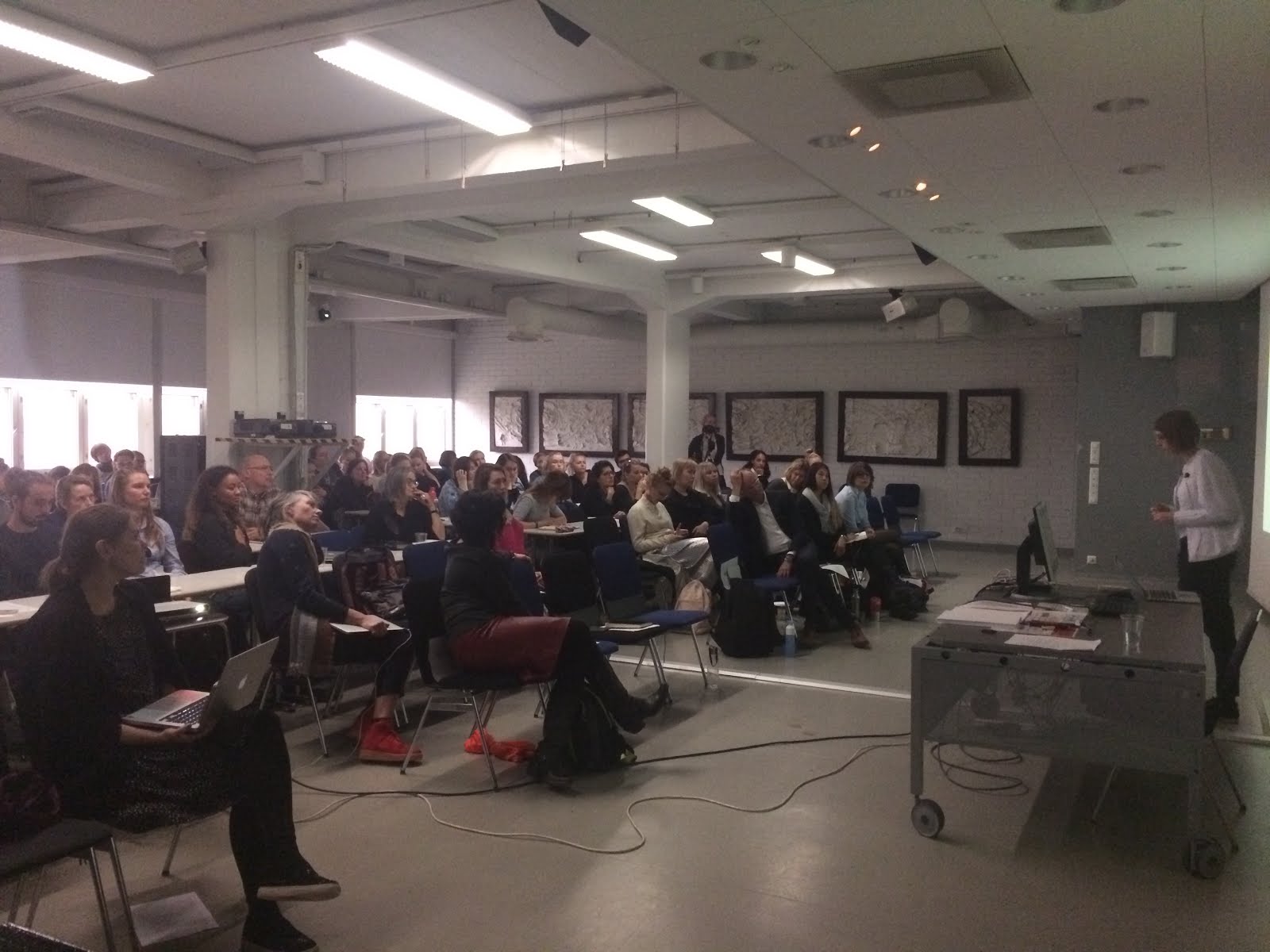
Finally, on the 8th, 9th and 10th of November I participated in the Product Lifetimes and the Environment (PLATE) in Delft. This was one of the best conferences I've attended. With around 150 attendees, it really felt like a community of like-minded people doing relevant research work. Surprisingly, there was a lot of research on clothing. The event included a PhD-only session for networking (photo), keynote speakers including the inaugural talk of Prof. Ruud Balkenende at TU Delft and dozens of article presentations. I presented the article "Reducing clothing production volumes by design: a critical review of sustainable fashion strategies", co-authored with Balkenende. I got great comments on the article and the results of the clothing mountain project, which I sneaked briefly in the presentation.


3 Apr 2017

On paradigm shifts and industrial revolutions: tracing prevalent dressmaking practices and apparel production systems in the Netherlands and northwest Europe (1850-2016).

My paper On paradigm shifts and industrial revolutions: tracing prevalent dressmaking practices and apparel production systems in the Netherlands and northwest Europe (1850-2016) was recently presented at the 19th IFFTI (International Foundation of Fashion Technology Institutes) conference in Amsterdam. The article got the first price for the category Postgraduate/Research students. See the abstract and download the full paper below.

ABSTRACT

Personalization, production on-demand, and flexible manufacture facilities are growing within the European apparel sector, supported by national and regional public policy. These developments seem to embody a much waited “paradigm shift” in the fashion industry; a shift from global to local scale, from quantity to quality and from standard products to personalized services. Such values, however, are far from new, and scholars have already pointed out the similarities between emerging and pre-industrial systems of production and consumption. This article argues that in order to understand current developments in historical context, we should return to the process of industrialization of the apparel industry during the turn from the 19th to the 20th C, taking into account aspects of production as much as mediation and consumption. With this aim in mind, the article traces the rise of ready-made garments in the Netherlands and northwest Europe, and the associated decline in custom- and home-made garments in the region. Although available statistical data is insufficient to accurately map these phenomena, secondary sources suggest that both processes were not simultaneous and therefore there was not a straightforward substitution of custom- and home-made clothing by ready-mades. While availability and trade of mass-produced ready-mades was escalating since the early 19th C, it was not until mid 20th C that custom- and home-made clothing declined among the middle class. In this study, such a gap is explained by a steady increase in the amount of clothes acquired per person: an expanding culture of consumption during the period under consideration may have enabled these different systems to flourish all together. A parallelism of the findings above with current developments suggests that we should not regard emergent industrial formats as substitutionary of established ones, but as complementary. We may then reevaluate to what extent does the rise of the flexible factory enable a “revolution”, a shift from a problematic present to a contrasting and desirable future. This historical overview indicates that, on the contrary, emerging product-service-systems manufacturing personalized garments on-demand must be considered in relation to – and in coexistence with- traditional industrial models.

30 Jan 2017

Mini-symposium ‘Sustainable Fashionʼ in TU Delft

On December 5, 2016, in the context of her PhD defence, Natascha van der Velden organised a mini symposium at TU Delft with the following programme.


It was a great opportunity to meet some people whose work I've been reading, in particular Kirsi Niinimaki.

24 Nov 2016

Article The Perfect Dress and its Making presented at ICDHS conference in Taipei

The Perfect Dress and its Making: A Comparative Study of the Sartorial Habits of Amsterdam Women (1950s-2010s)

Authors: Irene Maldini and Ragna Luciana Manz

Abstract

The shift from home and custom-made clothing to mass-produced ready-mades in 20th-century Europe has been the subject of studies from multiple disciplines and across various locations. Contributing to this field of studies, and extending the analysis until the present day, a group of female consumers living in Amsterdam in the 1950s and 2010s were interviewed about their sartorial habits. The study identifies a discrepancy between common manufacturing processes and values related to identity as a central cause of this shift. Furthermore it explores how such a discrepancy can be found again today, arguing that this divergence is leading to the re-emergence of customized production.

Keywords

dressmaking, mass production, customization, craftsmanship, identity

This article was presented last October at the 10th ICDHS conference in Taipei and published in the conference proceedings. In this edition, the topic of the conference was Making Trans/National Design Histories. In this context, a variety of articles on fashion history were presented in the conference. The intercultural connections among East Asian countries and between Asia and Europe in relation to dress were central for most of these articles. See article here.

20 May 2016

Workshop "How to address Socio-Historical Research-on-Design methodologically?" at the University of Antwerp

On Wednesday 18th of May I participated on this workshop aimed at young researchers in the field.  Seven PhD candidates presented a question related to the topic, while two professors (Alison Clarke and Tom Avermaete) reacted to our presentations.

The call for questions instead of finished work was exciting, and I took the chance to discuss a question that has been in my head for some years already: How can I integrate a design and a humanities approach in my research? I chose to present this mehtodological challenge in a polemic way, because the answer to this question may seem quite simple otherwise. My main points were:

- You cannot research the future (from a humanities perspective)
- You cannot design the past

These arguments already pose a challenge to actually combine both approaches. You can definitely research "visions of the future" from a humanities perspective, and, as one of the researchers in the audience pointed out, you can also design "visions of the past" or history.  However, that doesn't put the arguments above in question. Design research generally has a positivistic, future-oriented  and problem-solving approach, while research in the humanities is usually theoretical and critical, and reflects about issues of the past and the "present" (if that exists at all).

The workshop title suggested that discussion would be about humanities approaches to design, which is actually quite different to the question I posed, and most of the presentations were indeed about that. In this kind of research both design and humanities knowledge are needed and relevant, and it is definitely multidisciplinary research. But still, in my view that is a humanities approach. Similar approaches can be taken to any cultural field such as cinema, visual arts, etc.

A complementary research concept may be design research approaches to humanities-related issues. That is also common. A paper discussed by one of the other PhD candidates (Florencia Fernandez) on gender in product design is one example. In that article, researchers used the design process to explore alternative gendered products by exchanging visual elements between a kitchen blender and a drill. Although in a way multidisciplinary, that is in my view a design research approach.

So, is it really possible to combine both approaches in one research question?  I left the workshop with this second inquiry unresolved... The professors suggested that conceptual, critical design may combine both approaches. I agree. However, this activity is more related to practice that to academic research. I may continue my search for a question that is truly multidisciplinary, that combines both design and humanities approaches to research.


4 Dec 2015

Paper presented at the symposium "New Design, New Historians, New Histories of Design" Stichting Designgeschiedenis Nederland

From collective things to individual devices. Irene Maldini and Ragna Manz

Abstract:

Academic perspectives on fashion have been traditionally based on theories of identity, understanding sartorial practices as a permanent negotiation between social imitation and differentiation. These perspectives are mainly grounded on late 19th century and early 20th century analyses of modern society and they can still be seen at play today. However, we can recognize that sartorial practices and the role of fashion have changed since then. This article argues that a renovated theoretical and methodological approach can be useful to identify some of the aspects that have shifted; it specifically complements Georg Simmel and Gabriel Tarde’s theories of identity with Albert Borgmann’s philosophy of technology. Through this framework and using ethnographic methods we examine the sartorial habits of two groups of young women living and working in Amsterdam during the 1950s and 2010s. During the 1950s, when clothing was flexible and individual in its material construction, consumers’ articulation of identity was closely linked to explicit fashion trends. It was, to some extent, unidirectional. Today, we argue, clothes have become materially static artefacts and they are therefore less able to respond to the multidirectional construction of identity stressing individuality that characterises contemporary consumers. In sum, by combining views of clothing as social objects with perspectives of clothing as material artefacts, and exploring the potential of this approach through a case study, we are able to move beyond more traditional approaches to fashion and to uncover a paradoxical contemporary history of dress.

24 Jun 2015

Workshop Environmental Histories of Design at Rachel Carson Center in Munich


A group of 15 international researchers mainly from the fields of Design History, History of Technology and Science and Technology Studies came together last week to discuss their articles (work in progress), in a workshop funded by the project Back to the Sustainable Future (University of Oslo) and hosted by the Rachel Carson Center for Environment and Society in Munich. It was a great opportunity to put former and current visions of sustainability in design into perspective through critical analysis emerging from theoretical approaches and case studies. The overall atmosphere in my view was that of a small community of academics committed to the construction of a "better world" by assessing historical approaches towards sustainability in a critical way, in order to understand how are/were they socially constructed, to link them to the context where/when they emerged and draw a parallelism to current approaches.

Looking back to the workshop I am asking myself: What is the main contribution of such a "meta-approach" to sustainable design once the actual impact of these initiatives or positions on the environment/society is impossible to assess and the visions of what a better future should be are constantly changing? Well, during the workshop it was clear to me that such socially constructed visions of sustainability do impact how we shape our world in various ways and at different extents, and that putting them into perspective may help us to develop new ones, avoiding simplistic and naif approaches and understanding them in historical context, in relation to other contemporary phenomena.

The main period covered by the articles discussed was that of the 1960-70s when most influential design discourse and practice concerning the social and environmental implications of design emerged. Fifty years later, in the "era of sustainability" it's about time to learn from their ideas and  implications for our present in order to facilitate a second generation of significant positions. Where are the mature, world-changing initiatives of the 21 Century?

24 Sept 2013

Amsterdam Urban Innovation Week


Last week Pakhuis de Zwijger hosted the Amsterdam Urban Innovation Week. I attended three sessions:

Redefining Growth
Specially interesting in this session was the talk of Kate Raworth. Raworth demands the inclusion of "the environment" (natural resources, social capital, etc.) in the analysis of our economic model, questioning the perpetual pursuit of economic growth.  Through her diagram of the "Doughnut Economy", she claims for an economic model that balances our needs and the resources available to meet them. A clear and engaging talk for "dummies" in economy, like me.

Makers Movement: 3D printing
This session showed how active is the 3D printing community in Amsterdam and the Netherlands, it involved 15 speakers on the subject! Once again, the discussion of the 3rd Industrial Revolution came up (with Peter Troxler as a first speaker). This time, the message is that the 3D printer is an icon of this change, not necessarily the technology that enables it. In the same line, practitioners highlighted that "it is just one more tool", an statement that is certainly not aligned with the repercussion this technology is having in media. Overall, it seems that the popularity of the 3D printer as a world-changing machine is starting to decline. The managers and representatives of many "maker spaces" pointed out that digital fabrication tools complement traditional technologies. The main gain of this movement, according to them, is that it empowers people; they realize that they can solve their own problems and feel happy to be "in charge".

The Circular City: Sustainist Design
A promising session that didn't quite meet my expectations. However, John Thackara's talk was worthwhile. He claimed we should "forget about cities", since they are part of a bigger system and the circular model is not really achievable. Cities depend on many bigger systems and to ignore them prevent us to take action. With a hands-on approach, Thackara finds that solving local problems through direct engagement with the community is the only effective way to understand the bigger systems; during the talk he presented several local projects in developing and developed countries that involve farming, water systems, etc. as examples of this approach.


11 Jul 2013

Open Design / Shared Creativity Conference in Barcelona


Last week I attended the Open Design Conference in Barcelona. The event presented an interesting mix of open design practices and talks about collaborative consumption, the maker movement, and Barcelona as a digital city, most of them with a strong political component. It was very well organized and in an amazing location, it definitely worth the trip.

From all the talks, I found the opening one- Ezio Manzini's presentation of the possibility of a shift to the scenario defined by him as SLOC (Slow, Local, Open and Connected)- the deepest and at the same time understandable for the general public, with a wide point of view to analyze social transformations beyond the field of design. Moreover, some of the participants of the round table Barcelona Digital City had a surprisingly interesting approach, in particular those connected to academia showed, in my opinion, a good balance between an idealistic and realistic position (Mayo Fuster and Javier Creus). As expected, not all the presentations shared these characteristics and there were also more simplistic and "trendy"approaches of the subject.

13 Jun 2013

Research Summer School of Media Studies : "Audiences and users"

From June 10th to June 13th the I attended this Research Summer School in Rotterdam.  http://www.rmes.nl/summer-school-2012-2013/

My interest was on how the boom of participation, the phenomenon of amateurism and the discussion of the process of "democratization" enabled by the web had developed in this field. Media Scholars have definitely discussed the same topics that now start emerging in the field of Design Studies since many years. We could draw a parallelism between the popularization of digital cameras and the development of accessible digital fabrication tools and their implications for amateur (connected) production to illustrate this relationship. Besides meeting interesting Research Master and PhD students of several nationalities from several Universities of the Netherlands, I accessed a number of very relevant articles that could shape a theoretical framework also applicable to understand Open Design. Some of them are:

Beer, D. (2009). ‘Power through the algorithm? Participatory web cultures and the technological unconsciousness’. New Media & Society 11 (6): 985-1002.

Carpentier, N. (2012). ‘The concept of participation, if they have access and interact, do they really participate?’ Communication Management Quarterly, 21, 13–36.

Hargittai , E. W. Russell Neuman & O. Curry (2012). ‘Taming the Information Tide: Perceptions of Information Overload in the American Home’. The Information Society: An International Journal, 28:3, 161-173

Livingstone, S. (2013). ‘The Participation Paradigm in Audience Research’. The
Communication Review, 16:1-2, 21-30

Van Dijck , J. (2009). ‘Users Like You: Theorizing Agency in User-Generated Content’. Media, Culture and Society 31 (1): 41-58.

A couple of useful papers on methodology:

Markham, Annette N. [2012]: ‘Fabrication as ethical practice: Qualitative inquiry in ambiguous internet contexts’. Information, Communication and Society 15 (3): 334-353.

Novek, S., Morris-Oswald, T., & Menec, V. (2012). ‘Using photovoice with older adults: some methodological strengths and issues’. Ageing and Society, 32(3): 451-470.


Fairphone Open Design Bootcamp

The Open Design Lab of Waag Society and Fairphone organized in May 30-June 1st the "Fairphone Open Design Bootcamp" where 18 professionals related to design, business, sustainability, electronics and the phone industry worked in three parallel challenges: to design a phone that lasts, a DIY phone and a fair phone that feels fair. Several proposals came out of these intensive days (see links bellow).


Experiencing co-design as a practitioner, as opposed to 'silent' observer, gave me new insights for my own research, especially in relation to individual vs. shared work and the implications for innovation, efficiency, ownership of ideas and results, and well-being. Once the results are open and available online I wonder if these may be used by other parties with different purposes, providing an interesting case study of the processes of open design. We already know the importance of documentation to enable these processes, but I would add the need for tools that keep track of "organic" parallel developments that may occur from this point on. The possibility to map open design cases and their adoption, transformations or failure along time would provide researchers with very useful information to understand the multiple processes emerging from the model of open design.

Related links:
http://waag.org/nl/blog/fairphone-design-bootcamp-designer-s-perspective
http://www.fairphone.com/2013/06/12/design-bootcamp-results/
http://www.fairphone.com/2013/06/10/fairphone-design-bootcamp-a-designers-perspective/